
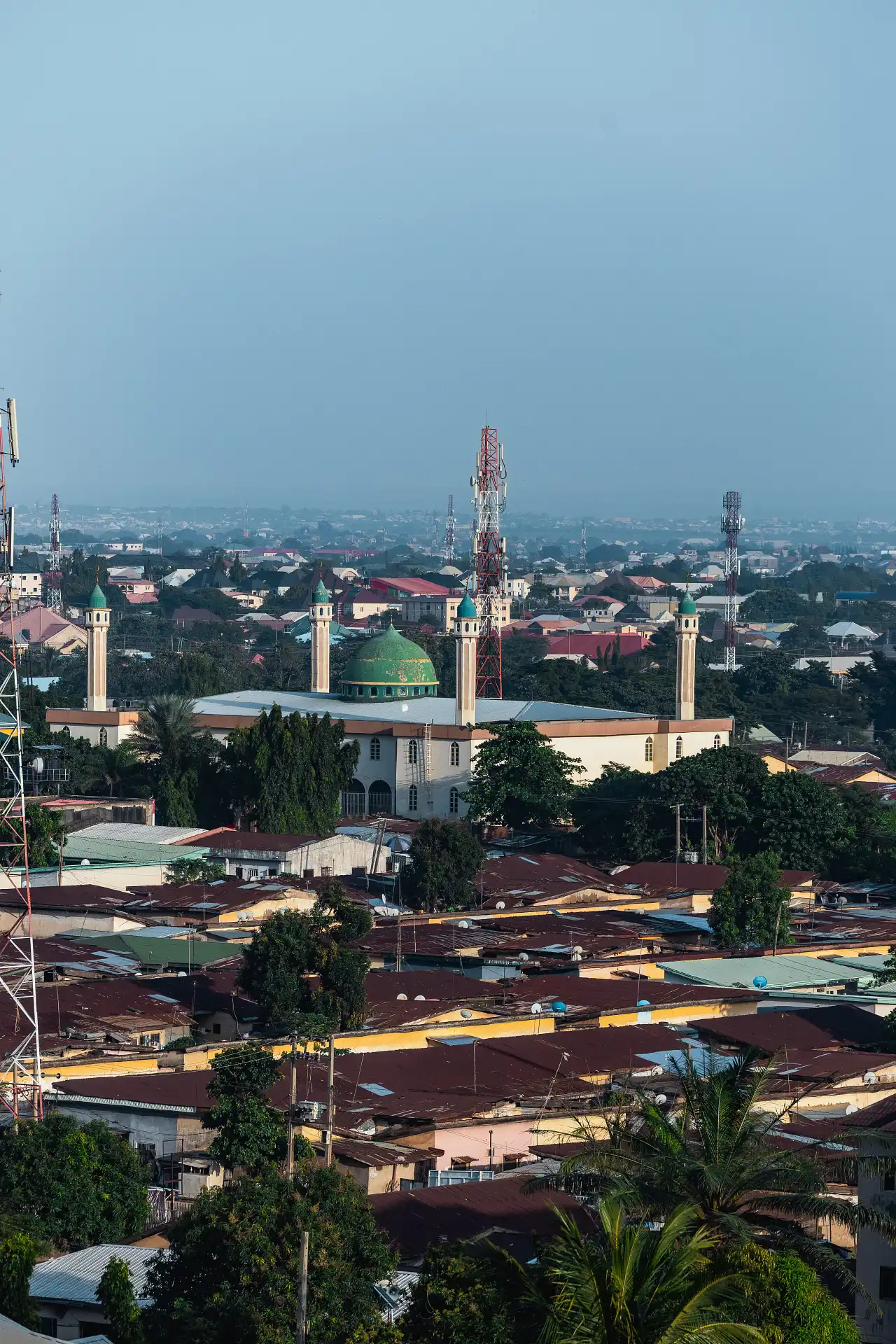
Abuja, Nigeria
Get custom flight tickets and dynamic holiday quotes from the UK to Abuja, Nigeria
About this Route
Abuja is the capital city of Nigeria, purpose-built in the 1980s as a centrally located, neutral administrative hub for the country. Renowned for the massive monolithic Zuma Rock that guards its northern entrance, Abuja combines striking natural landmarks with modern urban planning, wide boulevards, and impressive contemporary architecture. As Nigeria's political and administrative center, Abuja offers a calmer, more organized alternative to Lagos while still providing rich cultural experiences, upscale amenities, and convenient access to flights connecting travelers across West Africa and beyond.
Why Visit Abuja?
Abuja is home to some of Nigeria's most iconic landmarks, including Zuma Rock, a 725-meter monolith often called the "Gateway to Abuja." The city also features the National Mosque and National Christian Centre, standing near one another as symbols of Nigeria's religious diversity. Aso Rock, another dramatic rock formation, overlooks the Presidential Villa and adds to the city's dramatic skyline. Visitors can also explore the Nike Art Gallery, one of the largest art galleries in West Africa, and enjoy nature at Millennium Park, a popular green space in the city center.
What Makes Abuja Unique?
Unlike many African capitals, Abuja was carefully planned and constructed to serve as a neutral administrative center, resulting in wide roads, organized districts, and modern infrastructure. Its blend of dramatic natural rock formations with sleek government buildings and diplomatic missions gives Abuja a distinctive skyline unlike anywhere else in West Africa. The city also enjoys a relatively cooler climate compared to coastal Nigerian cities due to its inland, elevated location.
Best Time to Fly to Abuja
The best time to visit Abuja is during the dry season, from November to March, when rainfall is minimal and sightseeing is most comfortable. Temperatures remain warm year-round, but the dry season offers clearer skies for exploring Zuma Rock and other outdoor attractions.
How to Get to Abuja
Abuja is served by the Nnamdi Azikiwe International Airport, which connects to major cities across Africa, Europe, and the Middle East. AdventureFlight offers convenient flight booking options to help travelers plan smooth trips to Nigeria's capital.
Frequently Asked Questions (FAQs)
Q1: Why is Abuja Nigeria's capital instead of Lagos?
A: Abuja was chosen as Nigeria's capital in 1991 due to its central location, which was seen as more neutral and accessible for the country's diverse regions compared to the coastal city of Lagos.
Q2: What is Zuma Rock, and why is it famous?
A: Zuma Rock is a massive 725-meter monolith located just outside Abuja, often referred to as the city's gateway. It's a defining natural landmark and a popular photo spot for visitors.
Q3: What is the best time of year to visit Abuja?
A: The dry season from November to March offers the most comfortable weather for sightseeing and outdoor activities in Abuja.
Q4: What language is spoken in Abuja?
A: English is the official language, though Hausa, Yoruba, Igbo, and other local languages are also widely spoken.
Q5: What currency is used in Abuja?
A: The Nigerian Naira (NGN) is the official currency used throughout Abuja and the rest of Nigeria.
Q6: Are there direct flights to Abuja?
A: Yes, Nnamdi Azikiwe International Airport offers connections to numerous international destinations, and AdventureFlight can help you find suitable routes and schedules.
Q7: What are the top attractions to see in Abuja?
A: Must-see attractions include Zuma Rock, Aso Rock, the National Mosque, National Christian Centre, Nike Art Gallery, and Millennium Park.
Tours in Abuja, Nigeria
Interested in visiting Abuja, Nigeria?
Fill out the quick quote request below. Our agents will check direct contracted fares and design a personalized itinerary for you.